
 Emma Jantzen
 Memphis BBQ: What Makes It Iconic and How to Enjoy It — Ribs, Sauce & Home-Smoking Tips
Memphis BBQ: What Makes It Iconic and How to Enjoy It
Memphis BBQ is one of the most recognizable regional barbecue traditions in the United States, known for its pork-focused menu, balanced sauces, and a devotion to low-and-slow smoking. Whether exploring smoky ribs at a neighborhood joint or trying a home smoker for the first time, understanding what defines Memphis-style barbecue helps elevate the experience.
What sets Memphis BBQ apart
– Pork is king: Ribs (often spare ribs) and pulled pork from the shoulder are the staples. Whole-hog cooking remains a celebrated technique at competitions and carnivals, but many restaurants specialize in expertly smoked shoulders and racks.
– Dry vs. wet: Memphis is famous for both dry-rubbed ribs and “wet” ribs finished with sauce during cooking. Dry ribs showcase a spice crust that highlights paprika, brown sugar, garlic, onion, and cayenne; wet ribs get a glossy, saucy finish that caramelizes on the surface.
– Sauce profile: Memphis-style sauce tends toward a tomato-based, sweet-and-tangy profile—thicker than Carolina vinegar sauces but not as cloying as some regional versions. It’s designed to complement, not overpower, the smoke and meat.
– Bark and smoke: A deeply flavored bark (the seasoned, caramelized exterior) and a harmonious smoke flavor—often from hickory, pecan, or fruit woods—are key.
Proper smoke balance enhances rather than masks the pork’s natural richness.
How Memphis pitmasters approach smoking
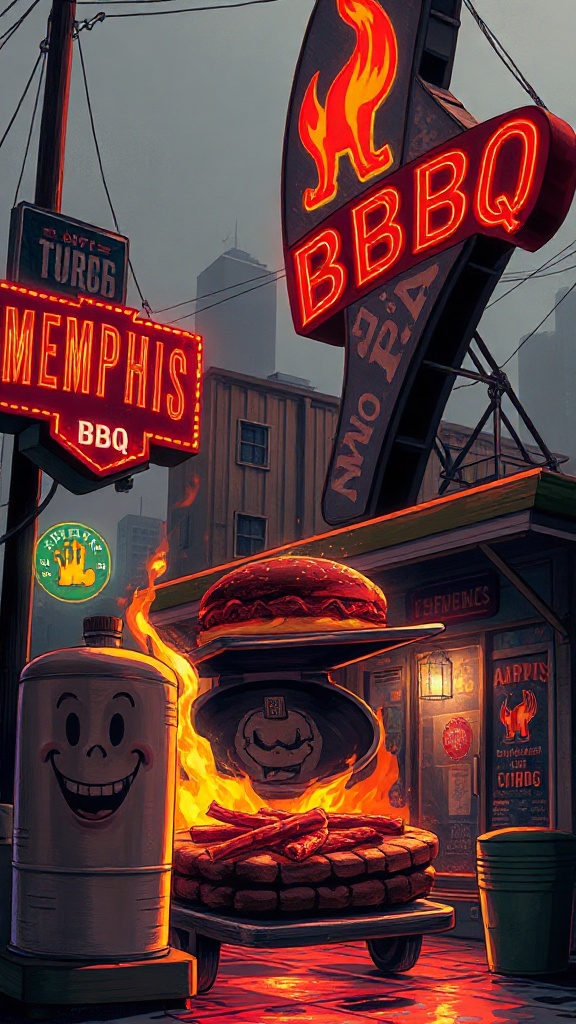
Low-and-slow is the mantra. Meats are seasoned and left to absorb smoke for several hours until tender. Temperature control and consistent airflow matter more than flashy tricks. Common wood choices include hickory for its assertive smoke, pecan for a milder nutty note, and apple or cherry for a sweeter, fruitier touch. Many pitmasters use a mop sauce or spritz to keep meat moist during long cooks, and finishing techniques—like wrapping in foil—help achieve tenderness without losing bark.
Eating Memphis BBQ
Signature dishes to try include:
– St. Louis–style spare ribs or full slabs finished dry or wet
– Pulled pork sandwich piled high, often served with coleslaw either on the side or on the sandwich
– Whole-hog plates at festivals, featuring a range of textures across the carcass
Classic sides—baked beans, collard greens, corn bread, and tangy coleslaw—balance the richness of smoked pork. For beverage pairings, try local beers, a crisp lager, or iced sweet tea to cut through the fattiness.
Trends worth watching
Memphis BBQ embraces tradition while adapting to modern tastes.
Expect to see more:
– Craft and boutique sauces and rubs emphasizing high-quality ingredients
– Sustainable sourcing, including pasture-raised pork and traceable supply chains
– Innovative sides and fusion flavors that blend barbecue with other cuisines
– Plant-based options like smoked jackfruit or mushroom “pulled pork” for vegetarian diners
– Barbecue pop-ups, collaborations with local breweries, and events that celebrate the city’s culinary heritage
Cooking Memphis-style at home
Start with a good dry rub, pick a preferred wood, and aim for steady heat rather than extremes. Be patient—authentic texture and smoke absorption develop slowly. Taste frequently as the cook progresses, and use sauce judiciously so the smoke and rub remain the stars.
Memphis BBQ is a celebration of simplicity and skill: modest ingredients transformed by time, heat, and smoke. Whether sampling a rib at a famous pit or firing up a smoker in the backyard, the goal is the same—deep flavor, tender meat, and a little char that prompts another bite.