
 Emma Jantzen
 Carolina Lowcountry
Carolina Lowcountry: salt marshes, seafood, and soulful culture
The Carolina Lowcountry is a landscape you feel as much as you see—quiet tidal creeks, live oaks draped in Spanish moss, and a coastal culture shaped by sea and soil.
Stretching from the tidal rivers and barrier islands to historic port towns, this region combines culinary richness, unique ecosystems, and a living heritage that rewards anyone who slows down to explore.
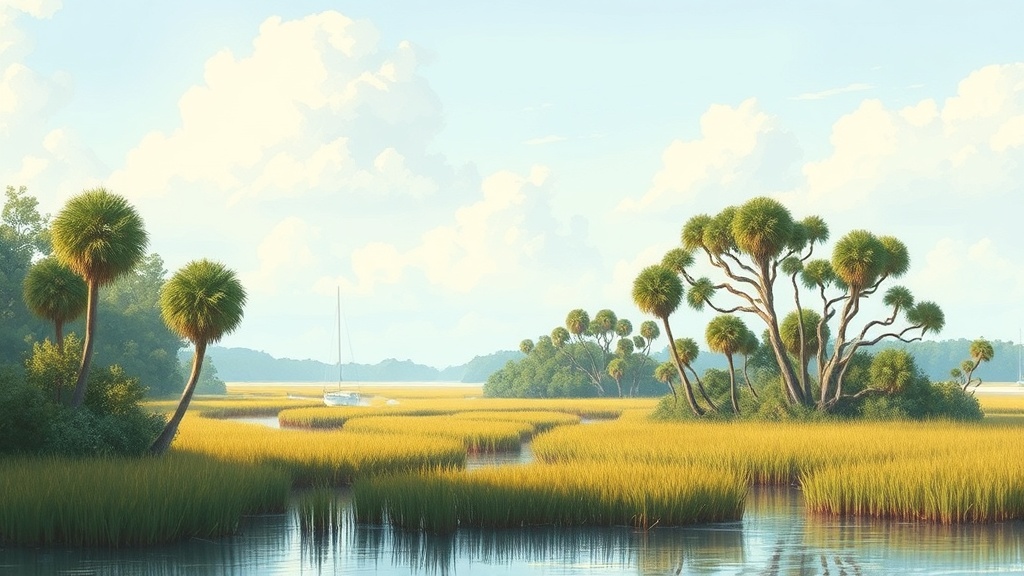
Landscape and ecology
The Lowcountry’s defining features are its salt marshes and barrier islands. Marsh grasses and mudflats filter water, support nursery grounds for fish and shrimp, and create stunning tidal rhythms that attract birdlife and photographers. Barrier islands buffer the mainland from storms, while maritime forests anchored by venerable live oaks provide dramatic coastal scenery. These ecosystems are critical for biodiversity and for local livelihoods—from commercial fisheries to tourism—and they respond visibly to changing coastal conditions.
Culture and cuisine
Lowcountry food is an expression of place. Shrimp and grits, she-crab soup, hoppin’ john, and benne wafers are culinary traditions rooted in the region’s resources and the cultural influence of the Gullah Geechee community. The Gullah Geechee people preserve West African linguistic, culinary, and craft traditions that shaped Lowcountry life.
Visiting local markets, farm stands, and family-run restaurants offers the best way to taste the region’s flavors and support community-driven preservation.
Things to do
– Explore tidal creeks and marshes by kayak or paddleboard to see crabs, herons, and dolphins in their natural habitat.
– Take a boat tour to a barrier island for beachcombing, birding, and shelling—many islands are only accessible by scheduled ferries or guided trips.
– Walk the historic streets of Charleston or Beaufort to appreciate antebellum architecture, museums, and interpretive sites that highlight the area’s complex history.
– Sample Lowcountry cuisine at seafood shacks and farmers’ markets; look for sustainable seafood options and locally grown produce.
– Join a guided oyster restoration or marsh clean-up to connect with conservation efforts on the ground.
Practical travel tips
Visit during shoulder seasons for milder temperatures, fewer crowds, and active bird migrations. Pack sun protection and insect repellent for marsh excursions, and bring waterproof footwear if you plan to explore tidal flats. When choosing tours and guides, prioritize operators who practice responsible ecotourism—those who emphasize wildlife-safe viewing, habitat protection, and community benefits.
Conservation and community resilience
Coastal communities in the Lowcountry are actively responding to environmental pressures with innovative approaches: living shorelines, oyster reef restoration, marsh grass plantings, and cultural heritage programs. Supporting local nonprofits, buying from coastal fishers and farmers, and participating in reputable volunteer initiatives are meaningful ways to help. Preservation includes both ecosystems and culture—efforts to document Gullah Geechee traditions and to maintain access to the water for small-scale fishers are as essential as habitat restoration.
Why visit
The Lowcountry invites slow travel. It’s a place to savor a sunrise over a marsh, listen for migrating songbirds, taste food shaped by tides, and learn about layered histories that continue to influence life on the coast.
Whether you come for nature, food, or history, leaving with a commitment to respect and protect the landscape will keep the region vibrant for those who follow.