
 Emma Jantzen
 The Ultimate Bayou Guide: Wildlife, Food, Culture & Conservation Tips for Visitors
Bayou life blends slow-moving water, dense vegetation, rich foodways, and generations of stories. Where freshwater meets brackish marshes, communities have adapted to a rhythm tied to tides, seasons, and the subtle rise and fall of the land.
That blend of ecology and culture makes the bayou both a living classroom and a place to slow down and pay attention.
Sights and sounds
Early mornings are filled with mist, the calls of herons and egrets, and the soft slap of oars or outboard motors. Cypress trees draped in Spanish moss create cathedral-like canopies; their “knees” poke through shallow water while marsh grasses whisper in the wind. Dragonflies, frogs, and turtles are everywhere, and the occasional alligator slips silently beneath the surface.
Birdwatchers and photographers can find migratory songbirds and raptors along shorelines and in reed beds, while night brings a chorus of insects and frogs that feels almost orchestral.
Food and festivals
Bayou cuisine is a cornerstone of local identity. Crawfish boils, gumbo, jambalaya, and fresh seafood showcase a connection between land and table. Many family-run businesses and fishers supply markets and restaurants directly, so eating locally often means fresher, more sustainable choices. Festivals celebrate harvests, music, and culinary traditions—an opportunity to taste authentic flavors and support small vendors.
Daily work and craft
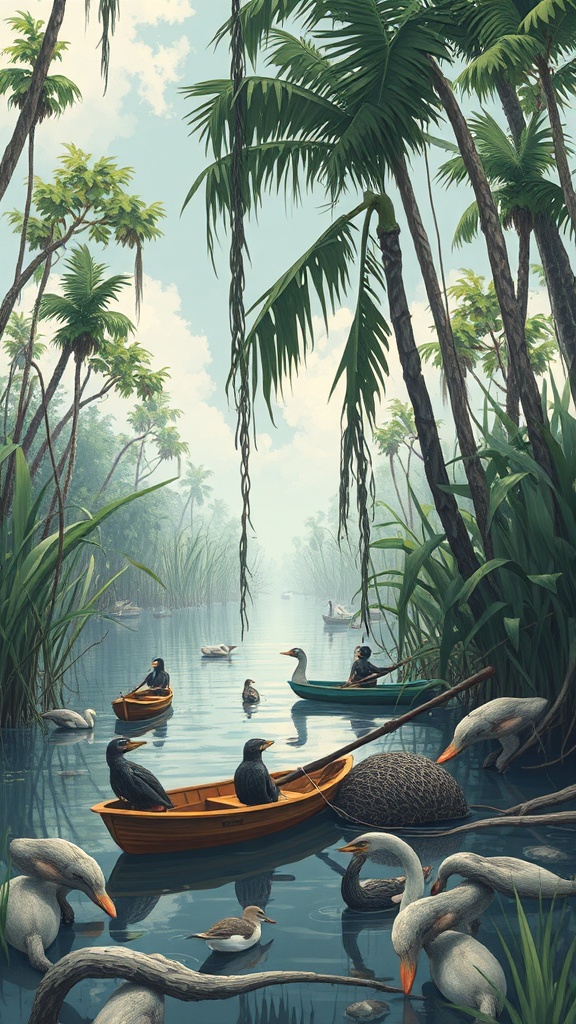
Fishing, shrimping, crabbing, and trapping are still livelihoods for many.
Traditional boats like skiffs and pirogues remain common, and skills such as knot-tying, net-mending, and navigating shallow channels are passed down through families.
Craftsmanship extends to boat-building, woodwork, and the making of local musical instruments—expressions of culture that are practical and artistic.
Practical tips for visitors
– Respect private property and ask permission before entering or photographing homesteads.
– Follow local regulations: licenses, seasons, and size limits help maintain fisheries.
– Safety first: wear a life jacket, keep a lookout for submerged logs and shallow areas, and use insect repellent.
Be cautious around wildlife and never feed alligators.
– Pack for changing conditions: sun protection, waterproof storage for electronics, and sturdy footwear are essential.
– Support local businesses—buy seafood and crafts locally to help sustain the economy.
Conservation matters
Bayous are ecological hotspots that provide flood buffering, water filtration, and habitat for countless species. They are sensitive to erosion, pollution, and habitat fragmentation. Simple, powerful steps help protect them: reduce plastic and chemical runoff, avoid creating wakes that erode banks, participate in or donate to wetland restoration projects, and opt for sustainably harvested seafood. Volunteering with local conservation groups or joining community cleanups can make an immediate difference.
Cultural respect
Listening is essential.
Bayou communities have unique dialects, histories, and belief systems—Cajun and Creole traditions among them. Celebrate music styles like zydeco and the culinary skills that have been honed over generations. Approach cultural experiences with curiosity and respect, and seek out guided tours or cultural centers run by locals to learn more ethically.
Bayou life is an invitation to slow down, observe, and participate responsibly. Whether you’re there for birding, a family boil, or to learn about resilient ecosystems, taking care of the water and the people who live alongside it ensures the bayou’s stories will stay vibrant for generations to come.