
 Emma Jantzen
 Discovering the Magnificent Magnolia: A Journey through Its History, Benefits, and Unsurpassed Beauty
The Magnolia tree, an ageless primeval beauty, is a marvel of nature that has graced our landscapes for millions of years.
Their striking grandeur and intoxicating fragrance give our surroundings an ethereal feel. Today, we delve deep into the world of Magnolias, exploring their rich history, unique features, and their numerous benefits.
Originating from East and Southeast Asia and the Americas, Magnolia trees belong to a family of approximately 240 plant species. They are known for their stunningly large, aromatic flowers that come in a wide array of colors including white, pink, purple, and yellow.
These magnificent trees have long been admired for their resilience, as they are resistant to many pests and diseases.
Magnolia trees are often associated with the ancient times, being one of the oldest known flowering plants.
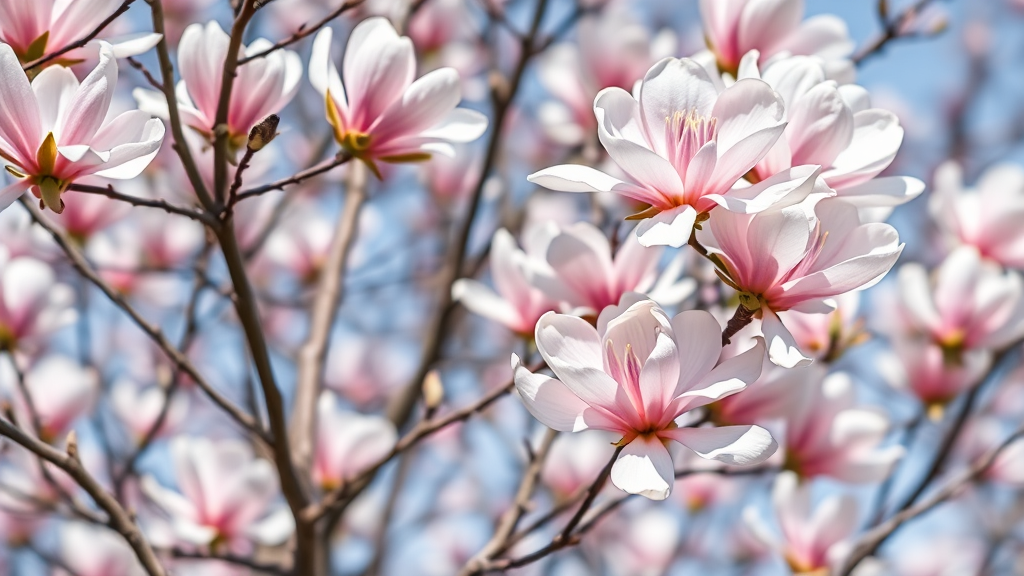
Their flowers, unlike most others, do not have petals and sepals. Instead, they have tepals – leaf-like parts that are not differentiated into petals and sepals. This feature is a testament to their ancient lineage, creating a unique blend of the past and the present in our backyards.
One of the most fascinating aspects of Magnolia trees is their ability to adapt to different climates and conditions. They can flourish in various soils, be it sandy, loamy, or clay.
They prefer slightly acidic soil, but they can also thrive in neutral or slightly alkaline conditions. While they adore the sun, Magnolias also do well in partially shaded areas. This versatility makes them a popular choice for both urban and suburban landscapes.
While their beauty is reason enough to plant them, Magnolia trees also offer an array of environmental benefits. They play a crucial role in improving air quality by absorbing pollutants. They also help in reducing soil erosion, thanks to their extensive root systems.
Moreover, Magnolias contribute significantly to local biodiversity. Their large, nectar-rich flowers are a magnet for pollinators like bees, butterflies, and beetles. Additionally, their dense foliage provides shelter and food for various bird species, contributing to a vibrant and healthy ecosystem.
Let’s not forget the health benefits associated with Magnolia trees.
In traditional Asian medicine, the bark and flower buds of Magnolia trees have been used to treat a variety of ailments. Recent research confirms that Magnolias contain compounds that have anti-inflammatory, antioxidant, and anticancer properties, further underscoring their importance beyond just aesthetics.
Growing a Magnolia tree is a long-term commitment but one that comes with rewarding results.
They grow slowly but can live for a hundred years or more if given the right care. While the time taken from planting to full bloom may be several years, the breathtaking sight of a fully bloomed Magnolia tree is worth the wait.
Maintenance of Magnolia trees involves regular watering, especially during dry periods, and an annual application of a balanced slow-release fertilizer.
Pruning is generally not required unless to remove damaged branches or maintain a specific shape.
In a world where stress and anxiety seem to be the order of the day, a Magnolia tree can serve as a source of relaxation and joy. Its elegant appearance and soothing fragrance can turn any space into a haven of tranquility.
As we’ve seen, the Magnolia tree is no ordinary plant.
Its timeless beauty, adaptability, environmental benefits, and medicinal traits make it a remarkable addition to any landscape. The Magnolia tree is not just a symbol of endurance and longevity, but it also serves as a reminder of how nature can be the best healer, provider, and artist.