
 Emma Jantzen
 Magnolia Trees: The Complete Guide to Choosing, Planting, and Caring for Every Variety
Magnolia trees are a timeless choice for gardeners who want bold blooms, glossy foliage, and a stately presence. Whether you have a large yard or a modest urban garden, there’s a magnolia variety that fits, from compact cultivars to towering specimen trees.
Here’s a practical guide to choosing, planting, and caring for magnolias so they thrive and become a focal point of the landscape.
Why choose a magnolia
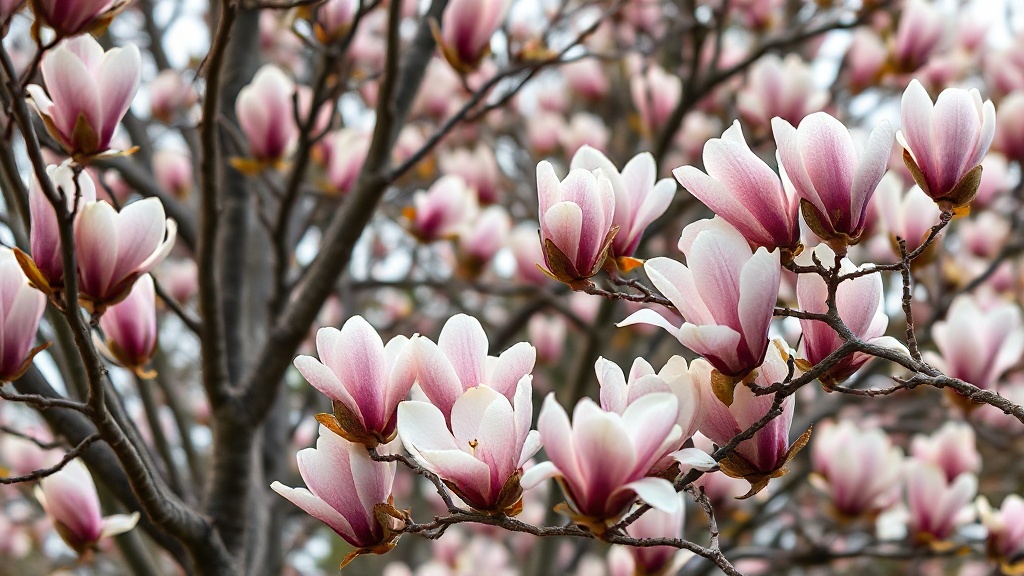
– Striking flowers: Many magnolias produce large, fragrant blossoms in shades of white, pink, purple, or yellow.
Some bloom before the leaves appear, creating dramatic displays.
– Landscape versatility: Magnolias work as specimen trees, small street trees, or flowering backdrops. Evergreen types provide year-round screening; deciduous types offer seasonal drama.
– Wildlife value: Flowers attract pollinators, and seed cones feed birds and small mammals.
Selecting the right variety
– Evergreen vs deciduous: Evergreen magnolias (such as southern types) keep glossy leaves year-round and are ideal for screening. Deciduous magnolias (such as saucer and star types) deliver spectacular spring flowers and a more open canopy for summer light.
– Size matters: Consider mature height and spread before planting. Dwarf and compact cultivars suit small gardens or containers; larger species need ample space and won’t be suitable near foundations or under power lines.
– Hardiness and climate: Choose varieties adapted to your local climate and microclimate—look for proven performance in similar neighborhoods or ask a local nursery for recommendations.
Planting and site selection
– Light: Most magnolias prefer full sun to partial shade. In hot climates, partial afternoon shade reduces stress and extends bloom quality.
– Soil: Rich, slightly acidic to neutral, well-drained soil is ideal. Amend heavy clay with organic matter to improve drainage and root development.
– Placement: Give the tree room for its mature canopy and root zone. Avoid compacted sites and areas where mechanical damage from mowers or string trimmers is likely.
– Planting tip: Dig a hole twice as wide as the root ball but no deeper.
Set the root flare slightly above surrounding soil, backfill gently, and water thoroughly to remove air pockets.
Watering and mulching
– Establishment: Keep newly planted magnolias consistently moist (but not waterlogged) through the first two growing seasons to encourage deep root systems.
– Long term: Once established, most magnolias tolerate short dry spells but benefit from supplemental watering during extended droughts.
– Mulch: Apply a 2–3 inch organic mulch layer, keeping it a few inches away from the trunk. Mulch conserves moisture, moderates soil temperature, and suppresses weeds.
Pruning and maintenance
– Minimal pruning: Magnolias generally need little pruning. Remove dead, diseased, or crossing branches.
– Timing: Prune deciduous magnolias immediately after flowering to avoid cutting off next season’s buds. For evergreen magnolias, light formative pruning in late summer helps maintain shape.
– Feeding: Apply a balanced, slow-release fertilizer if growth is poor or leaves are pale, following label directions.
Pests and diseases
– Common issues: Scale insects, aphids, and fungal leaf spots occasionally occur.
Good cultural practices—proper spacing, clean pruning cuts, and avoiding overhead watering—reduce problems.
– Control measures: Horticultural oils, insecticidal soaps, and targeted fungicides can manage outbreaks. For serious or persistent issues, consult a local extension service or certified arborist.
Propagation and companions
– Propagation: Magnolias can be grown from seed, cuttings, or grafting. Seed-grown plants may take time to flower and can vary from the parent.
– Companion planting: Shade-tolerant perennials such as hostas, ferns, and azaleas pair well beneath magnolias, benefiting from similar soil and moisture conditions.
A well-chosen and properly cared-for magnolia offers years of seasonal interest and sensory appeal. With the right variety and attentive planting, it becomes a signature plant that enhances both curb appeal and garden enjoyment.