
 Emma Jantzen
 Magnolia Trees: The Ultimate Guide to Choosing, Planting & Caring for Landscapes
Why magnolias remain a top choice for landscapes
Magnolia trees combine bold, fragrant blooms with glossy foliage, making them a standout in many gardens. Their flowers range from cup-shaped saucer magnolias to large, creamy southern magnolias and delicate star magnolias.
Beyond looks, magnolias are low-maintenance, long-lived, and attract attention from gardeners seeking both structure and seasonal interest.
Choosing the right variety
Select a species that matches your garden size and climate. Compact cultivars are ideal for small yards and containers, while larger species make dramatic specimen trees or screens. Evergreen magnolias work well where winter foliage is desirable; deciduous types offer an early spring floral show. Consider bloom time and frost sensitivity—many magnolias set flower buds the year before and can be damaged by late freezes, so sheltered sites are often best.
Planting and site selection
Magnolias prefer full sun to part shade and a sheltered spot away from strong winds that can break branches or damage blooms. They thrive in well-draining soil rich in organic matter with a slightly acidic pH. When planting, dig a hole twice as wide as the root ball and no deeper—set the root flare at or just above ground level to prevent settling. Backfill with native soil amended with compost, and water deeply to settle roots.
Watering, mulching, and feeding
Young magnolias need consistent moisture through their first few growing seasons. Water deeply and less frequently rather than shallow, regular watering; this encourages deep root development. Apply a 2–4 inch layer of organic mulch, keeping it a few inches away from the trunk to prevent rot and rodent damage. Feed sparingly: a slow-release, balanced fertilizer in spring supports growth without encouraging weak, succulent shoots that invite pests.
Pruning and shaping
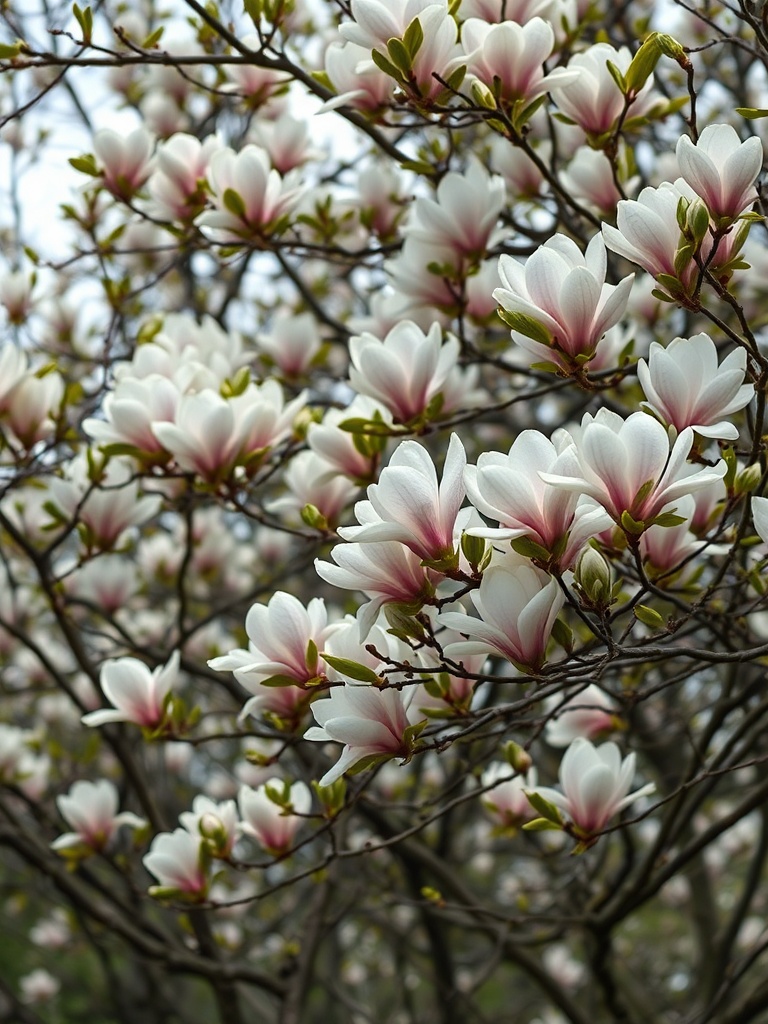
Minimal pruning is usually best. Remove dead, crossing, or damaged branches after flowering to preserve the natural form and avoid cutting off next season’s buds. For deciduous magnolias that bloom in spring, prune immediately after bloom to prevent removing flower buds. For evergreen types, light structural pruning in late winter or early spring keeps the tree shapely without compromising flowers.
Common pests and problems
Magnolia scale and fungal leaf spots are among the most frequent issues. Scale insects can be managed with horticultural oil sprays during dormancy or by encouraging beneficial predators.
Good sanitation—removing fallen leaves and improving air circulation—helps with fungal diseases. Magnolias stressed by drought or poor planting may attract wood-boring insects; maintaining vigor through proper watering and mulching is the best defense.
Propagation and longevity
Magnolias can be grown from seed, cuttings, or layering. Seeds often require stratification and patience, while semi-hardwood cuttings and layering produce faster results for clones of desirable cultivars. With proper care, magnolias can become long-lived treasures in the landscape, providing decades of blooms and seasonal character.
Quick care checklist
– Site: full sun to part shade, sheltered from strong winds
– Soil: well-draining, rich in organic matter, slightly acidic preferred
– Planting: root flare at or just above ground level
– Watering: deep, infrequent watering for established trees; regular moisture for young plants
– Mulch: 2–4 inches, kept away from the trunk
– Pruning: light, after flowering for spring-blooming types
– Pest control: monitor for scale; use horticultural oil in dormancy if needed
With the right variety and a little attention during the critical early years, a magnolia can be a centerpiece that delivers striking blooms, pleasing fragrance, and year-round presence for any landscape. Choose a site that protects buds from late frosts, maintain steady moisture, and enjoy a signature tree that enhances curb appeal and garden enjoyment.