
 Emma Jantzen
 Memphis BBQ: Why It’s Legendary and How to Taste It Like a Local
Memphis BBQ: What Makes It Legendary and How to Taste It Like a Local
Memphis BBQ is a celebration of pork, smoke, and regional flavor.
Renowned for its balance of sweet, savory, and smoky notes, this barbecue style has become a destination cuisine for travelers and a blueprint for backyard pitmasters. Whether you’re eating at a counter-service joint or firing up your smoker at home, understanding what makes Memphis barbecue distinct will change the way you approach smoked meat.
What defines Memphis BBQ
– Pork-forward: Memphis pits focus on pork—especially shoulder (pulled pork) and ribs.
The meat is the star, seasoned to enhance rather than hide natural flavors.
– Dry vs. wet ribs: Two classic approaches coexist. Dry ribs are coated with a spice rub and smoked without sauce, prized for a peppery crust (bark). Wet ribs receive a mop or glaze of sauce during cooking and just before serving, offering a stickier, saucier finish.
– Thin, tangy sauce options: Memphis sauces tend to be tomato-forward with a balance of sweetness and acidity, sometimes with a peppery kick. They’re often used sparingly to complement, not overwhelm, the smoke.
– Low-and-slow smoking: Traditional methods emphasize long, slow smoking over hardwood—hickory, oak, and fruitwoods are common—producing tender meat and deep smoke flavor.
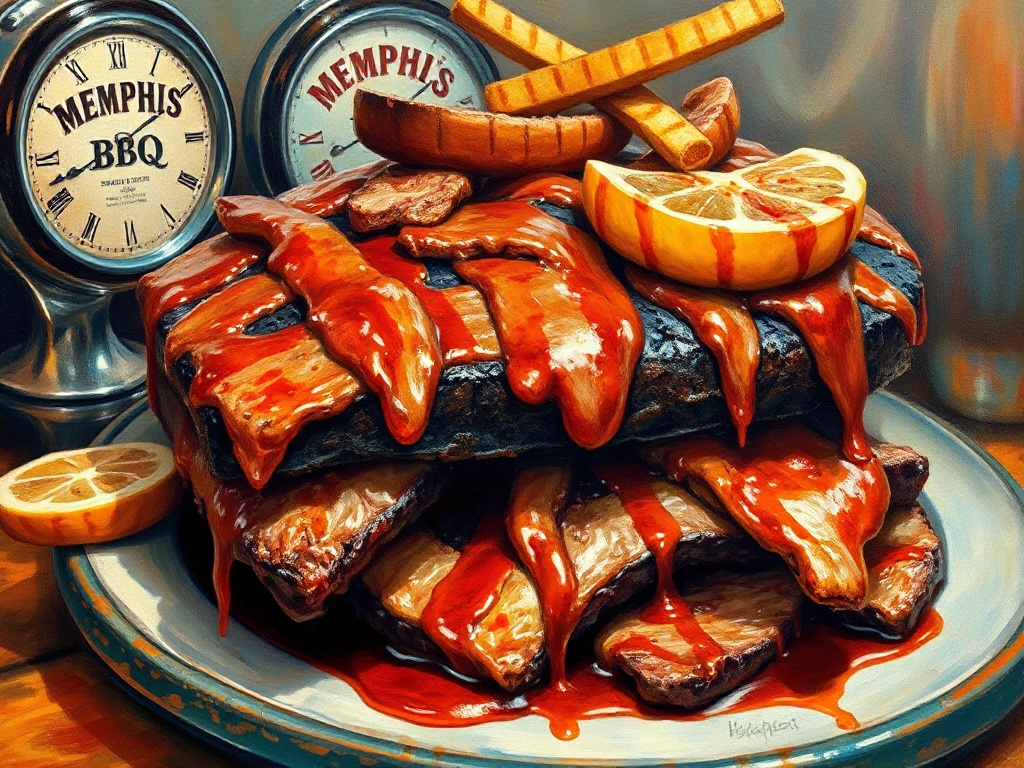
How to taste Memphis barbecue like a local
– Start with pulled pork: Look for moistness, a pronounced smoke ring under the bark, and hand-pulled texture. It’s commonly served on a bun with pickles, a side of sauce for personal preference, and classic sides like coleslaw.
– Try both rib styles: Order dry and wet ribs to appreciate the contrast—dry for spice and bark, wet for saucy tenderness.
– Pair with sides: Traditional sides include coleslaw, baked beans, potato salad, and cornbread. These provide textural and flavor balance: cool, creamy slaw cuts through richness; sweet beans echo sauce notes.
– Savor the bark: The outer crust on smoked meats—dark, spice-infused, and slightly caramelized—is a signature feature. A good bite will show a contrast between smoky exterior and juicy interior.
Iconic places and events
Memphis streets are dotted with neighborhood barbecues, from hole-in-the-wall counters to legendary downtown spots known for specific cuts or techniques.
Major food festivals and regional competitions celebrate pitmasters, with teams traveling to showcase ribs, shoulders, and whole-hog preparations. These gatherings are great for sampling diverse interpretations of Memphis barbecue and learning from the community.
Tips for home cooks
– Choose your wood: Hickory or oak for bold smoke; fruitwoods like apple or cherry for milder, sweeter notes.
– Keep temps steady: Aim for a consistent low heat and allow plenty of time—rushing will compromise tenderness.
– Use a rub and resist over-saucing: Let a dry rub form a flavorful bark; add sauce at the end if you want a glaze.
– Rest the meat: Let smoked pork rest before pulling or slicing to retain juices.
– Experiment with mops and glazes: A light mop during smoking keeps surfaces moist; finishing glazes add shine and flavor complexity.
Memphis barbecue is more than a meal—it’s a way of approaching smoke, seasoning, and community. Whether you’re eating at a celebrated pit or practicing low-and-slow techniques in your backyard, the hallmarks remain the same: respect for the meat, an appreciation for smoke, and a love of sharing bold, comforting flavors.