
 Emma Jantzen
 A Complete Guide
Magnolia trees deliver dramatic blooms, bold foliage, and a luxurious scent that makes them a standout in any landscape. Whether planted as a towering specimen, a compact patio tree, or a multi-stem accent, magnolias bring seasonal interest and unmistakable character. Here’s a practical guide to choosing, planting, and caring for magnolias so they thrive where you live.
Why choose a magnolia?
– Spectacular flowers: From saucer and star types with delicate cup-shaped or starburst blooms to southern magnolia’s large, creamy flowers, magnolias offer striking blossoms that often appear before or with the leaves.
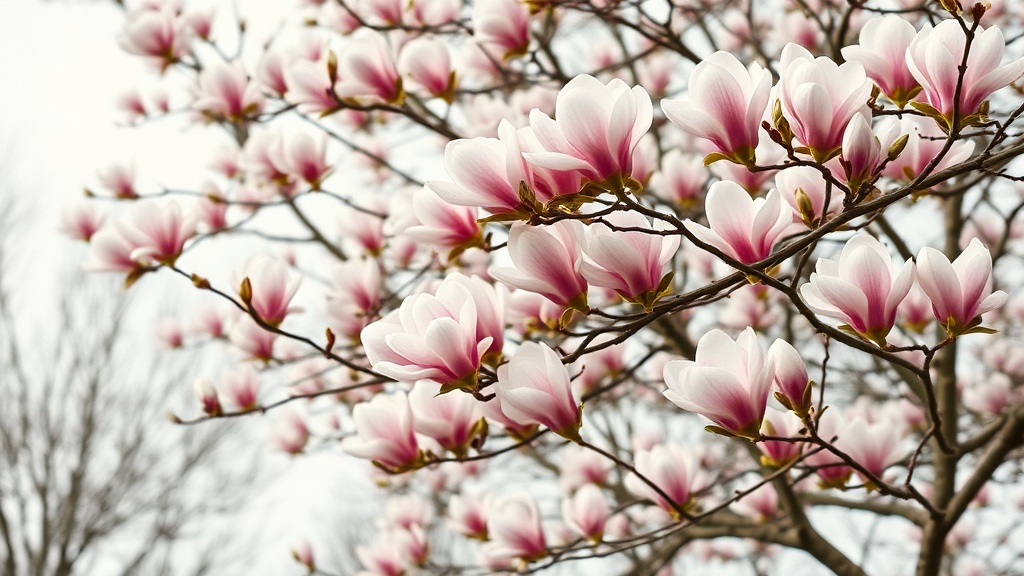
– Fragrance: Many varieties emit a rich, vanilla-citrus scent that fills the garden, making them ideal near patios or windows.
– Form and foliage: Evergreen types provide year-round structure; deciduous magnolias offer bold branch silhouettes in winter and lush canopy in growing season.
– Wildlife value: Blooms and seeds attract pollinators and birds.
Picking the right type
– For mild climates and year-round foliage, look for broadleaf evergreen magnolias that tolerate heat and humidity.
– For colder regions, choose cold-hardy deciduous varieties developed to withstand frost and late freezes.
– Dwarf and compact cultivars are available for small yards or containers; large species suit parks and expansive gardens.
Planting essentials
– Light: Most magnolias prefer full sun to part shade. Some understory species tolerate more shade.
– Soil: Aim for well-drained, slightly acidic to neutral soil. Magnolias don’t like standing water. Amend heavy clay with organic matter and consider planting on a slight mound to improve drainage.
– Space: Give mature canopy spread adequate room from buildings, driveways, and other trees. Roots can be wide-spreading, and large blossoms can be messy beneath narrow spaces.
– Timing: Plant during active growth seasons—spring or fall—when conditions allow roots to establish.
Care and maintenance
– Watering: Keep young trees consistently moist but not waterlogged. Mature magnolias are somewhat drought-tolerant but benefit from deep watering during extended dry spells.
– Mulch: Apply a 2–4 inch layer of organic mulch around the root zone, keeping mulch away from the trunk to prevent rot. Mulch conserves moisture and moderates soil temperature.
– Feeding: Use a balanced, slow-release fertilizer sparingly in early growing season if growth appears sluggish. Avoid high-nitrogen formulas that encourage foliage at the expense of blooms.
– Pruning: Minimal pruning is best. Remove dead or crossing branches in late winter or after flowering for deciduous types. Avoid heavy topping, which stresses magnolias.
Pests and problems
– Watch for scale insects, aphids, and magnolia borer. Early detection and horticultural oil sprays or targeted treatments can control outbreaks.
– Fungal leaf spots and powdery mildew may occur in humid conditions; improve air circulation and avoid overhead watering.
– Root rot develops in poorly drained soils; addressing drainage and planting on raised beds helps prevent it.
Propagation and longevity
– Propagation by semi-hardwood cuttings or grafting preserves cultivar traits. Seed-grown magnolias take longer to flower and may not match parent characteristics.
– With proper care, magnolias can live for many decades and, in the right setting, become a family heirloom tree.
Planting a magnolia is an investment in long-term beauty and scent.
Select the right variety for your climate, give it well-drained soil and space to grow, and enjoy seasons filled with iconic blooms and graceful form.